
Meditation, Pranayama & Neuroplasticity: How Conscious Breathing Rewires the Brain

In recent years, neuroscience has begun to confirm what ancient yogic traditions have long known — the brain is not fixed. It is constantly reshaping itself in response to experience, thought, emotion, and practice. This remarkable ability is called neuroplasticity, and it lies at the heart of healing, learning, emotional regulation, and resilience.
Among the most powerful tools to influence neuroplasticity are meditation and pranayama — practices rooted in Indian wisdom that directly engage the nervous system. Far from being merely spiritual or relaxation techniques, they actively rewire neural circuits, reshape stress responses, and restore balance between mind and body.
For a world overwhelmed by anxiety, burnout, digital overload, and chronic illness, understanding this connection is no longer optional — it is essential.
Understanding Neuroplasticity: The Brain That Changes Itself
Neuroplasticity refers to the brain’s ability to:
- Form new neural connections
- Strengthen or weaken existing pathways
- Reorganize itself after stress, trauma, or injury
Every repeated thought, habit, or emotional pattern leaves a physical imprint in the brain. Chronic stress strengthens fear-based circuits. Repetitive worry reinforces anxiety loops. Likewise, calm attention, mindful awareness, and controlled breathing strengthen circuits of stability, clarity, and emotional regulation.
This means healing is not just psychological — it is biological.
Meditation: Training the Brain Through Awareness

Meditation is often misunderstood as “emptying the mind.” In reality, it is mental training — learning to observe thoughts without reacting to them.
What meditation does to the brain

Regular meditation has been shown to:
- Increase thickness and activity in the prefrontal cortex (decision-making, emotional control)
- Reduce hyperactivity in the amygdala (fear and threat response)
- Strengthen connectivity between emotional and rational brain centers
- Improve attention, memory, and impulse control
With practice, the brain learns a new default mode — responding instead of reacting.
Emotional resilience through meditation

Meditation interrupts automatic stress loops. When thoughts are observed rather than believed, the nervous system receives a signal of safety. Over time, this weakens anxiety circuits and builds pathways associated with calm awareness.
This is neuroplasticity in action — not through force, but through gentle repetition.
Pranayama: Breathing as a Neural Switch
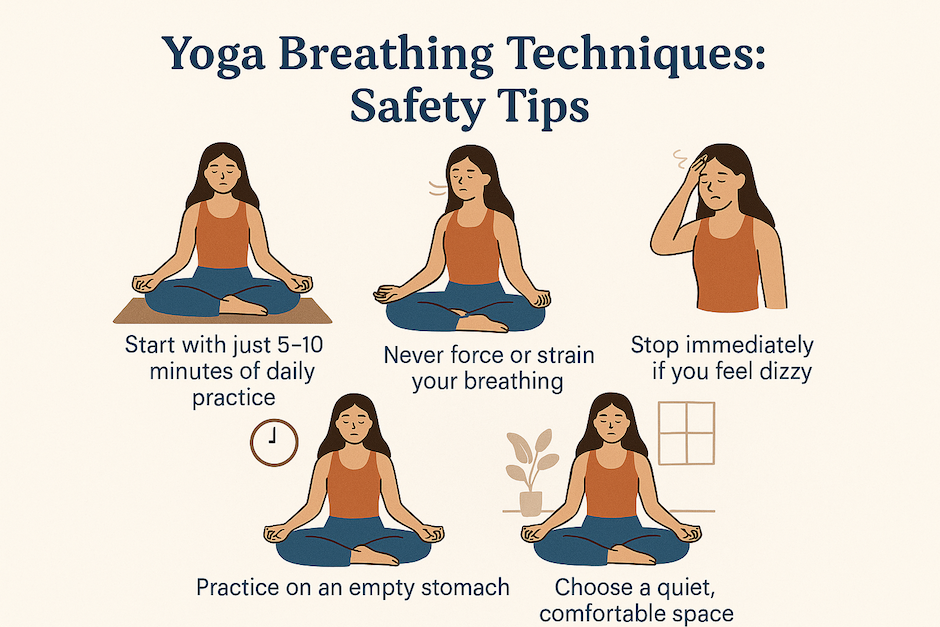
If meditation trains the mind, pranayama trains the nervous system.
Breath is the only autonomic function we can consciously control — making it a direct gateway to influence heart rate, stress hormones, and brain rhythms.
The vagus nerve connection
Slow, rhythmic breathing stimulates the vagus nerve, a key regulator of:
- Heart rate variability
- Emotional balance
- Digestive function
- Inflammatory responses
When the vagus nerve is activated:
- The body shifts from fight-or-flight to rest-and-repair
- Cortisol levels reduce
- Brain waves move toward calmer alpha and theta states
This physiological shift creates the ideal environment for neuroplastic change.
How Pranayama Rewires the Brain
Different pranayama techniques influence the brain in distinct ways:
- Slow deep breathing strengthens emotional regulation pathways
- Alternate nostril breathing balances hemispheric brain activity
- Extended exhalation reduces anxiety-driven neural firing
- Rhythmic breath patterns improve focus and memory
Over time, these practices:
- Reduce stress reactivity
- Improve sleep quality
- Enhance emotional stability
- Increase tolerance to discomfort
The brain learns safety — and safety allows growth.
Meditation + Pranayama: A Synergistic Effect
Meditation and pranayama are most powerful when practiced together.
Pranayama prepares the nervous system, calming physiological turbulence. Meditation then reshapes cognitive and emotional patterns.
Together they:
- Create new neural defaults of calm alertness
- Break cycles of rumination and fear
- Improve learning, creativity, and empathy
- Support healing in anxiety, depression, chronic pain, and trauma
This is why traditional yogic systems never separated breath from awareness.
Trauma, Stress & the Plastic Brain
Chronic stress and unresolved trauma alter the brain’s structure — shrinking areas related to memory and emotional regulation while enlarging fear circuits.
Meditation and pranayama do not erase experiences, but they change how the brain holds them.
By repeatedly signaling safety to the nervous system:
- Trauma responses lose dominance
- Emotional memories integrate rather than overwhelm
- The brain regains flexibility
Healing becomes a neural retraining process, not just emotional release.
Modern Life, Ancient Tools
In a hyper-stimulated digital environment, the brain is constantly pulled outward — notifications, screens, deadlines, comparisons. This weakens attention circuits and strengthens stress pathways.
Meditation and pranayama act as neural counterbalances:
- Slowing mental speed
- Restoring attention span
- Reconnecting body and mind
They are not escapes from life, but training for living better.
Making Neuroplastic Change Sustainable
Neuroplasticity responds to consistency, not intensity.
Even:
- 10–15 minutes of daily breathing
- A short meditation practice
- Gentle awareness of breath and body
can gradually reshape the brain.
The key is repetition with kindness — not discipline driven by force.
A Nellikka Perspective: Healing from Within
At nellikka.life, health is viewed not as the absence of disease, but as inner adaptability — the ability to respond, recover, and renew.
Meditation and pranayama are not lifestyle add-ons. They are foundational tools that reconnect modern neuroscience with ancient wisdom, helping the brain remember its natural capacity to heal.
When breath becomes conscious and awareness becomes steady, the brain changes — and with it, the quality of life itself.
In essence:
Neuroplasticity is the science of hope.
Meditation and pranayama are its most accessible instruments.
Together, they remind us that change is always possible — one breath, one moment at a time.


